Coach Mario Tomic

Germany, Dec 2023 - back bending
I'm relatively new to strength training, so I looked around for online fitness trainers. I found what I was looking for. Mario Tomic's videos are consistently excellent. Coaches who have struggled or made mistakes on their fitness journey are often better coaches than those who have had everything fall into their laps.
Here are some tips from one of his videos:
1. Embrace a data driven approach.
Basically, I agree with this. I use apps to document how often I practise yoga and how often I go to the gym. I also note the weights I lift. The machine does this for me. It also makes sense for me to document individual exercises or exercise sequences.
Mario Tomic also recommends constantly counting all your calories. I've already done that too. You have to know how many calories a chocolate bar has or 100 grams of rice. I no longer count my calories. I may come back to it again sometime. I cook. I know which foods are healthy. I listen to my hunger and my feeling of fullness. It still works for me.
2. Keep evolving your approach.
I found this point in the video particularly interesting. There are always new insights that you can use for yourself. Your own body is also changing. The fact that I started strength training has to do with a different approach to my yoga practice. It also helps to try a different approach to get out of a plateau. You never stop learning.
3. Never stop putting hard work into your practice. Progress doesn't happen in your comfort zone. Hard work is non-negotiable.
Yes. Yes. Yes. For me, I call this playing yoga or playing strength training. You can tell yourself that you've done something. But if you don't make an effort, time is lost. You have to make an effort. If you don't feel the pain of stretching, you don't stretch. If your muscles don't burn, they won't get stronger. You have to leave your comfort zone to learn.
4. Master patience.
A healthy lifestyle doesn't happen overnight. Perseverance is important, without question.
5. Actively seek accountability.
For me, this is my yoga blog. When I'm not practicing, I run out of topics for the yoga blog. I want to write authentically. That means I also have to practise.
All of Mario Tomic's videos are worthwhile. Have fun and gain new insights with the channel.
Dokumentation against self-deception

Germany, December 2023 - Backbending
Documentation against self-deception
You deceive yourself if you don't practise intensively.
Yesterday afternoon I went to the gym again. The machines in the recommended circuit stand in a circle so you can see what the others are doing. I didn't see any effort in the faces of my fellow exercisers. I'd be interested to know how many kilos my colleagues are lifting. If someone is really pushing their limits, then you can see it. You only have to google Arnold Schwarzenegger. Every cell is strained when he lifts weights. You can see that. You can really feel it. My competitors look like they're resting when they pull on the weights.
But I wasn't a bit better. I was satisfied with the default setting that was measured a few weeks ago. I also knew that I could do better. When I realized this, I increased the weights by 1 kg in the second round. That didn't really exhaust me either. Next time I will add a kilo in the first round and 2 kg in the second round. I should be able to lift 20 kg, regardless of which muscles I use. You train the big muscles like legs, back, abdomen, arms, chest etc. anyway ...... Last night in bed I was still thinking that I would have to lift my own body weight if I wanted to do a pull-up even once in my life. That's a lot more than 20 kg.
You have to make an effort if you want to achieve something.
This morning I was rewarded. My scales showed me that the percentage of muscle had gone up, and that the fine-grained bulge had gone down. That's the reward for regular, strenuous training. Hallelujah. I am happy. I am getting stronger.
I know that I also cheated myself out of success for years because I didn't know any better.
It starts with a sloppy chaturanga dandasana and continues with holding the asanas too short. I didn't know any better and the teachers obviously didn't either. I was never corrected. Self-study is a must.
What can you do about self-deception?
1. You can document your training. It's easy to record the frequency with an app. You can only get out as much as you put in. My trainer said that many of her clients only want to train once a week. That's not enough. Three times a week is where the fun starts.
2. Pictures help. The feeling is often different from the reality.
3. It helps to write down what you have learned and then ask yourself whether you are actually doing it. I know that the asanas need to be held for longer than just 5 breaths if you want to have a lasting stretching effect. I'm going to start setting the timer again when I practise urdhva dhanurasana. One minute of urdhva dhanurasana must be manageable. The more often you practise this, the easier it becomes.
4. Always trying to find the limits is useful. As long as your body can still lift the weights, you have not yet reached the limit of your own capabilities.
5. Keep studying, asking questions, observing like-minded people. This can help to avoid mistakes. Learning never stops.
Don't just try and do it. Practice intensively. Live intensively. Be present. Do your best.
Strength training

Germany, December 2023 - Usthrasana
If you want to stay fit in old age (60 plus), you have to do more than before and eat more intelligently. From the age of 40, your strength should start to decline. It doesn't matter when you notice it, but at some point you realize that you are getting weaker. The older you get, the more important it is to train your strength.
Some yoga exercises are so much harder for me than they used to be because I don't have the strength. The vinyasa of the 1st Ashtanga Yoga series are only rudimentary at the moment.
I have been doing strength training for a year now.
I recently changed gym because there is a gym nearby. Anything that is too far away, you do less often than you want to.
The new gym also took a medical history. That seems to be standard. You find out more about your own body values after registering at a gym than after a medical history at the doctor.
But what really motivates me is that I have another appointment with my trainer at the end of February. Then she will measure again how much strength I have and how high my fat percentage is. We are living in the decade of measurements and control. I take a critical view of this. But it also has advantages. Finding out where you stand is an advantage.
You can also sign up for a challenge every month in the app. Then you can see how many activity points you have collected compared to the others. I see that as positive competition. You're not floating in a vacuum with no direction. I immediately thought: I want to be in the top half. So I packed my sneakers on Friday and off I went. That's how people are.
There is a so-called EGym in the studio. These are 9 machines that train the most important muscles. This EGym was recommended to me.
Here are the machines that are supposed to make me stronger:
1. rowing machine
2. rotator
3. leg curl
4. abdominal trainer
5. chest press
6. lat pulldown
7. gluteus
8. back trainer
9. leg extension
When I log on to the individual machines, they are automatically set for me. I then move my 17 kg, 23 kg or whatever my current level is.
The circuit training is done twice. It takes about 45 minutes. Afterwards you know what you've done.
After that, you can train on other machines or do cardio training. I also got five callisthenics exercises. As a yogi, I don't forget to stretch at the end. I don't want to lose my flexibility. I was so happy when I saw two wall bars on the functional area. I do my last exercises on them before jetting home happily and exhausted.
What I learned (not new, but something I experience again and again):
- It's good to set yourself goals. I want to increase my muscle mass to over 30%.
- Being part of a group is very helpful.
- Regularity is important.
Keep practicing.
The perfection trap
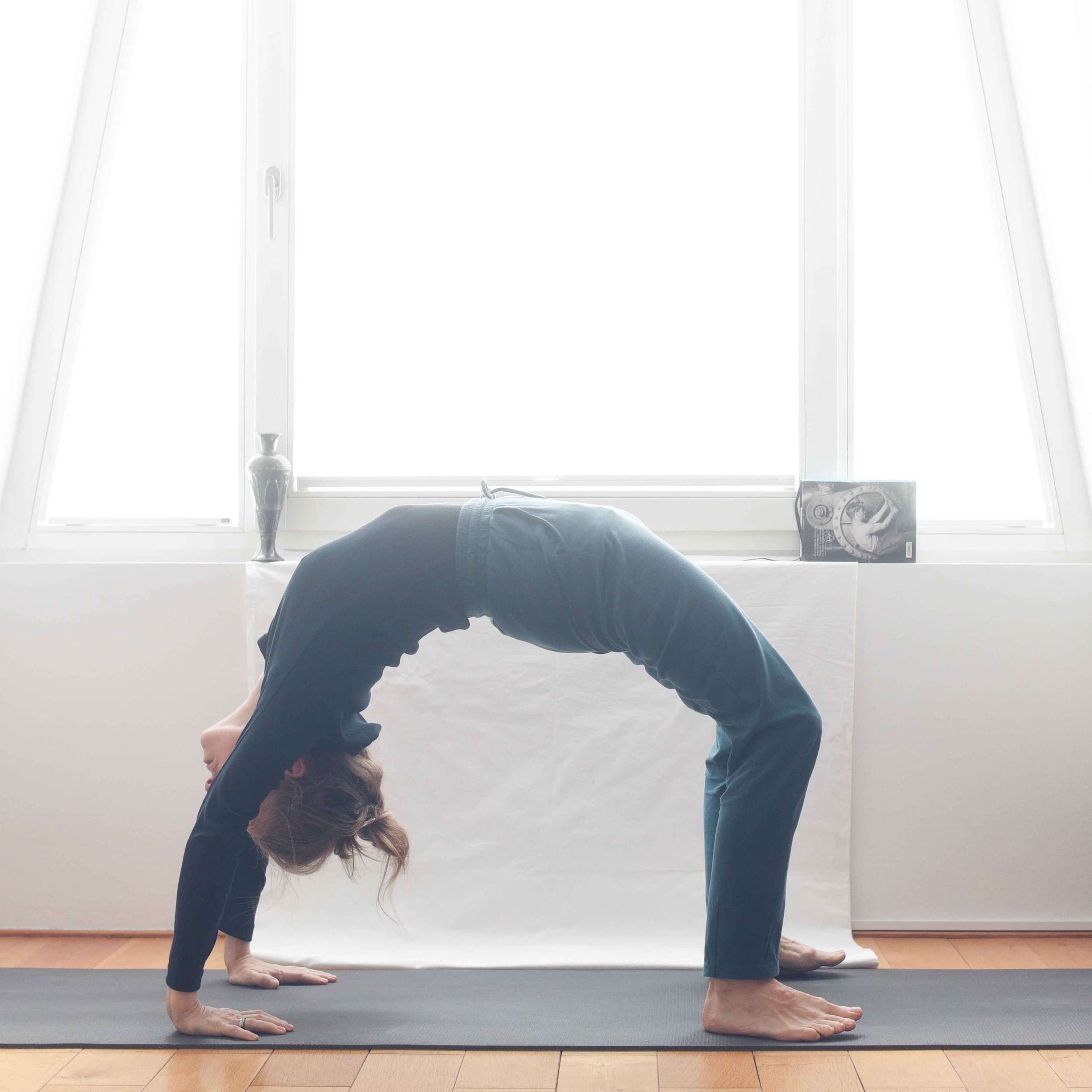
Germany, December 2023, urdhva dhanurasana
My goal was and is to photograph the asanas of the four Ashtanga yoga series. Of course, you have to be able to perform these asanas first.
Well, I definitely wanted to get from urdhva dhanurasana to standing before I started photographing the 2nd series.
And I wanted to get the heels on the floor in pashasana before photographing this asana and then the next asanas. I also wanted to keep to the sequence.
I had set the bar so high that nothing happened in the end.
Who knows how long it will take me to get the heels in pashasana on the floor? At the moment, I'm happy when my fingers reach each other. I'm a long way from reaching the joint.
Coming into standing from urdhva dhanursana is very challenging. Who knows when I will succeed. In a month, in two years?
Next year I will change my approach to the goal of photographing the asanas in the Ashtanga yoga series. I will photograph the asanas that have reached a level that I am happy with. More is always possible. Then I will see which asanas remain. I can then devote myself particularly intensively to these hard chunks.
The journey then goes from easy to difficult.
Today I realized again how important it is to take pictures. They provide important clues as to the direction in which you can continue practicing. Taking pictures interrupts the flow. The focus is more on the pictures than on the exercise. But pictures are so helpful that I don't want to do without them. It's also super interesting to see the difference between feeling and reality.
Practicing yoga in the gym.

Germany, Nov 2023, forward fold
Practicing yoga in the gym.
That's what I'm doing now and I'm thrilled.
I can design my own exercise, but I'm among people who are also working on their programs. It gives me energy and I'm free. The space is big. There is a mirror to correct the asanas. There is a huge wall of windows on one side. When I look out, I can see people wrapped up in winter waiting for the trains.
I'll be getting up at 5 a.m. again tomorrow. I'm looking forward to it.
Urdhva dhanurasana - an analysis
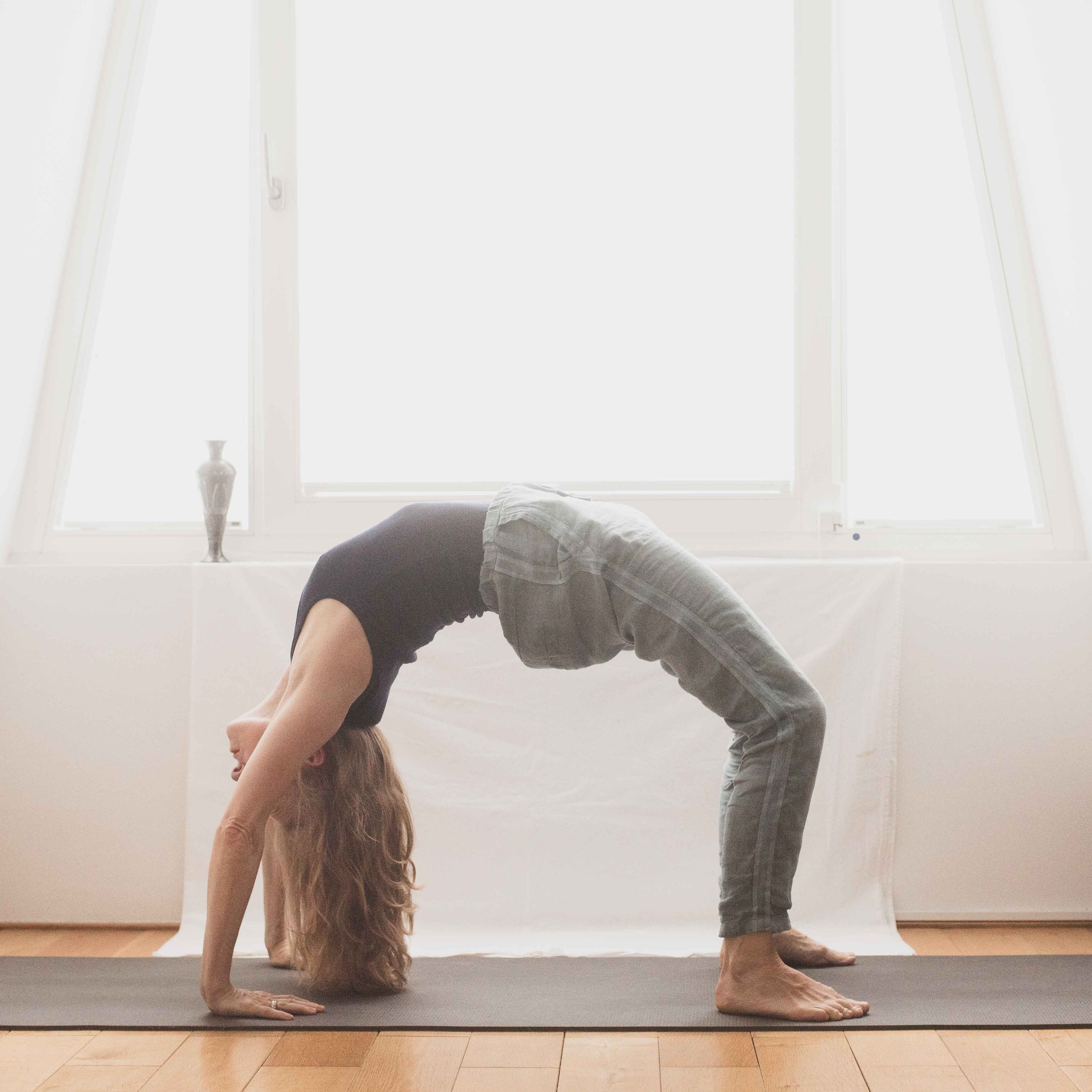
Urdhva dhanurasana, Germany, August 2023
I quite like what I see. The bridge is very symmetrical. I also manage to press myself straight into the position. The elbows are as good as stretched.
I also see that there is still potential.
- The hands could move even further to the feet or vice versa.
- The hips could be stretched further.
- The neck and also the upper body and also the shoulders could be stretched further.
This is immediately a plan. The individual body parts can be trained in isolation.
Strength is also needed. It happens to me again and again that I lie on my back and then think: Oh no, now push the entire body up, my goodness. I think it's because of the strength that's needed here, or rather the lack of strength. The position becomes easier when you are stronger. You can also think of the whole exercise as a strength exercise. You brace yourself against the normal straight posture.
In Callisthenics, the bridge is also an exercise. You keep pushing yourself into the position. The colleagues in the other gym see the position as a strength exercise first and foremost. For the yogis, everything is stretching first. You push yourself into the position over and over again.
One goal could be to aim for three sets of twelve repetitions.
So many ideas, and time just runs out.........
Back bending exercises
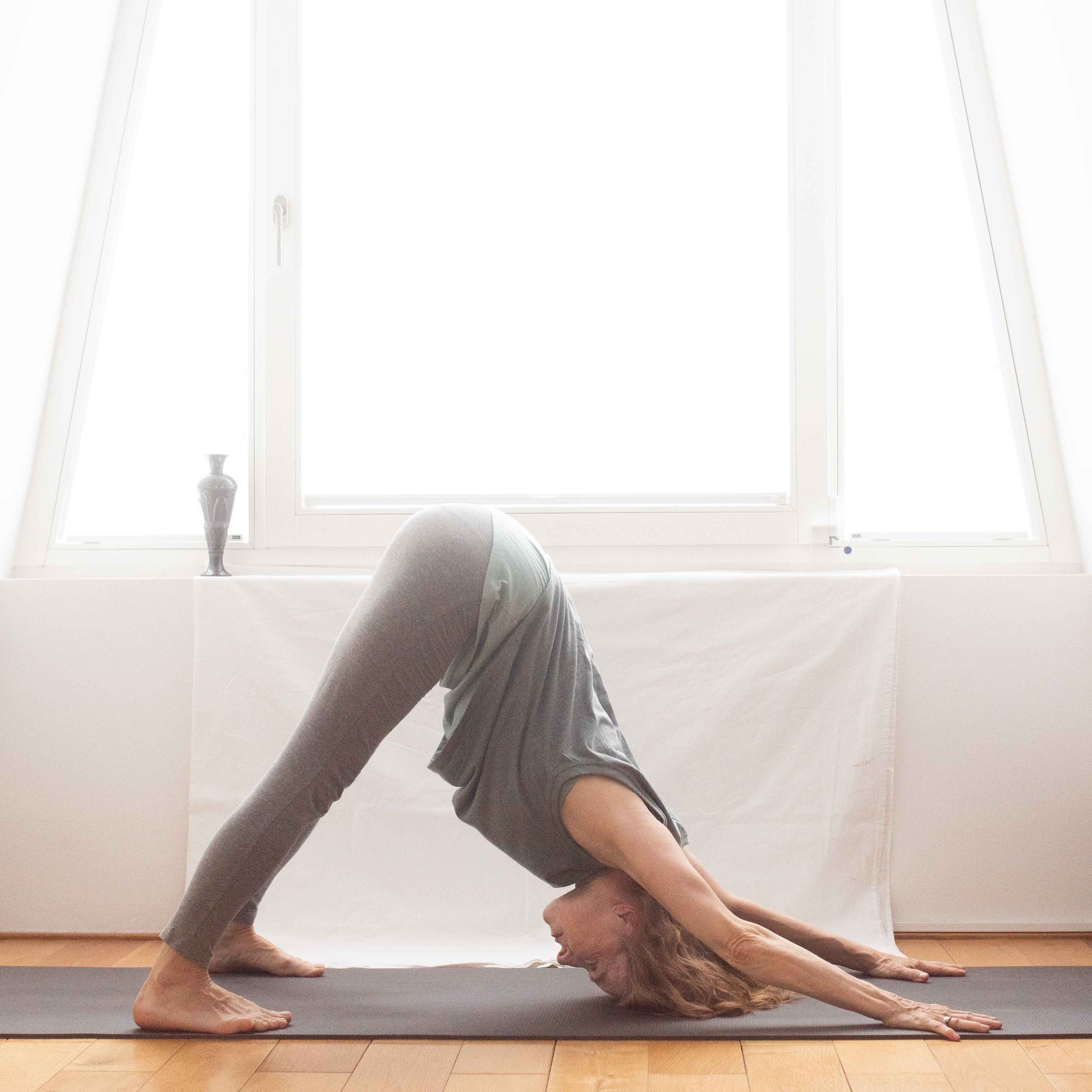
Shoulder stretch in adho mukha svanasana, Germany, August 2023
There is often not enough time to practice again in the afternoon to do all the asanas that I would like to do. Rolling out the mat twice a day doesn't often happen, even though the good will is there. Therefore, I try to integrate exercises that I would like to do into my Ashtanga Yoga practice in the morning.
At the moment I am working more intensively on backbends again. It is easy to add a shoulder stretch after urdhva mukha svanasana. Normally urdhva mukha svanasana is a triangle. When you stretch the shoulders and move the head to the floor, one side of the triangle becomes a curved line. The exercise can be performed dynamically and statically. It is not a very intense stretching of the shoulder area but it is an intense warm-up.
When practicing alone, one can arrange the exercise session as one considers appropriate. One can respond to one's own needs. For almost all asanas I can think of easier and also more difficult variations. Depending on the condition, the routine becomes more challenging or more relaxed.
Going to a yoga class every day is a lot easier. You pack your bag with your yoga clothes, you take your yoga mat and that's it. Once you leave the house, everything goes by itself. There is no turning back. Not much discipline is required.
Practicing alone always takes discipline. You learn to motivate yourself. Through this, you also get to know yourself. One remains independent. But there are always days when you struggle through the exercises much more than you would in a group.
Ultimately, it is also a goal to be able to practice alone.
Shoulder stretch for back bending
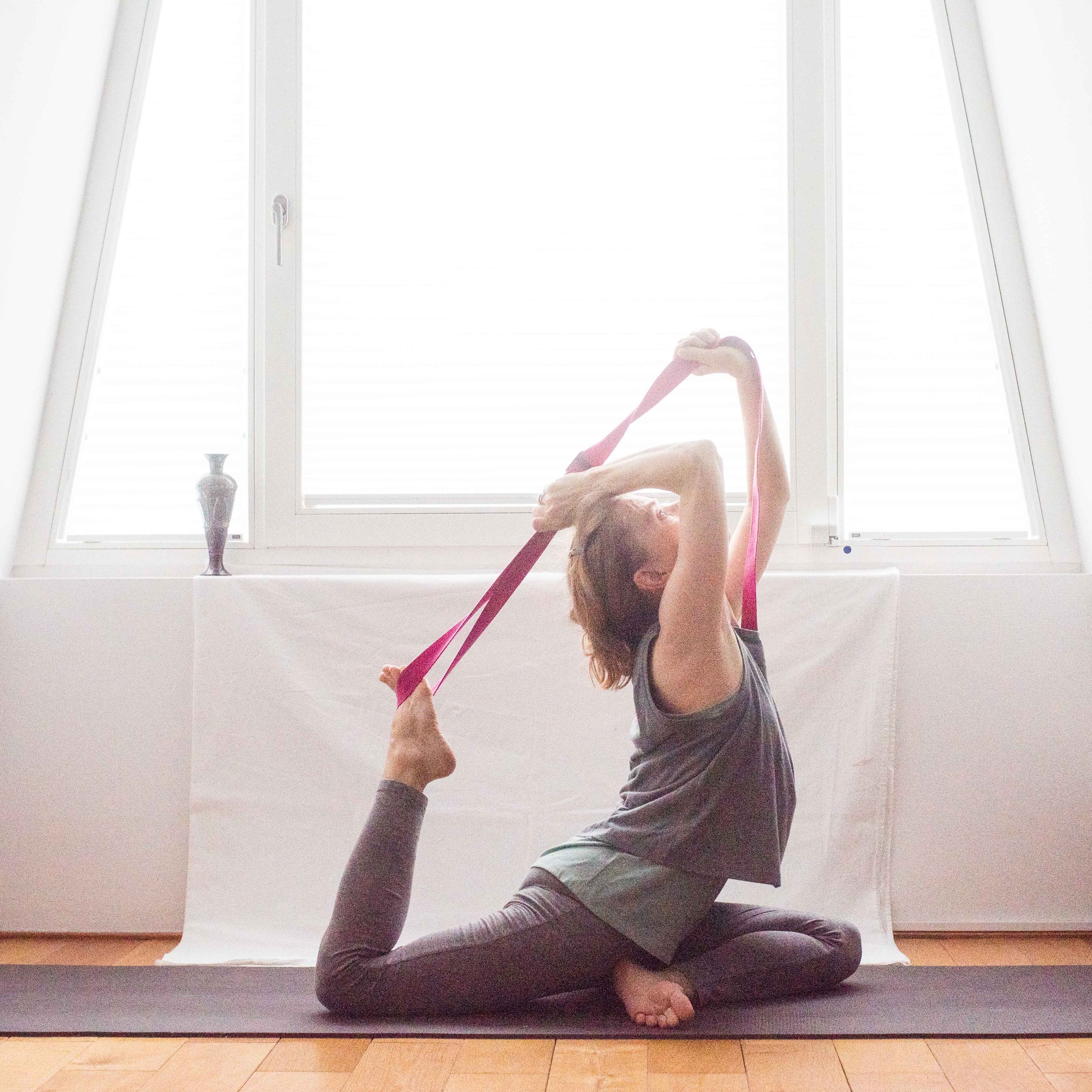
Back bending, August 2023
There are so many exercises that it can be difficult to choose. Stretching the shoulders and chest muscles in isolation helps improve backbends. Rarely do we stretch upward. In the long run, this limits our mobility. All beginnings are hard. Stretching the shoulder may be uncomfortable at first. However, this 'pain' subsides.
In order not to waste the time applies:
- Hold exercises for a long time.
- Tense muscles.
- Also dynamic movements, rocking back and forth can help to get deeper into the positions.
- Daily practice, staying with it is also very important.
It is easy to deceive yourself. When you work on stretching, you also need to feel something. This is not always pleasant. Over time, you learn to deal with the 'pain'. Breathing regularly helps. You learn to relax even in a somewhat uncomfortable body position. One also learns to understand the messages of the body. There is pain that is a warning. It feels different than the pain that simply tells you that you are being stretched.
Again and again I also get to the point where I don't get anywhere with the stretching. Then aids are appropriate. I like to practice backbends against the wall. Blocks can also be very helpful.
The important thing is to develop an experimental mind and stay creative.
Happy practicing.
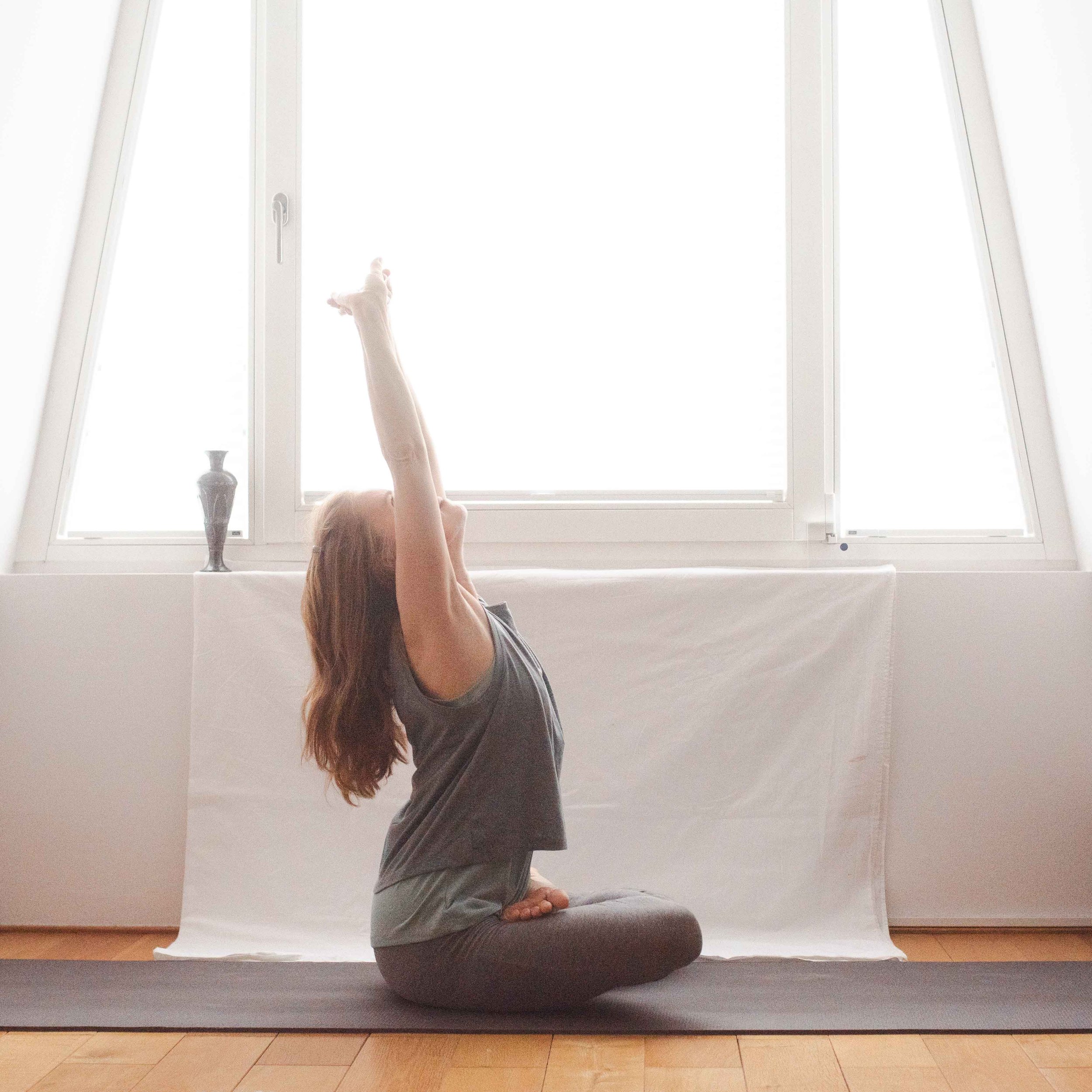
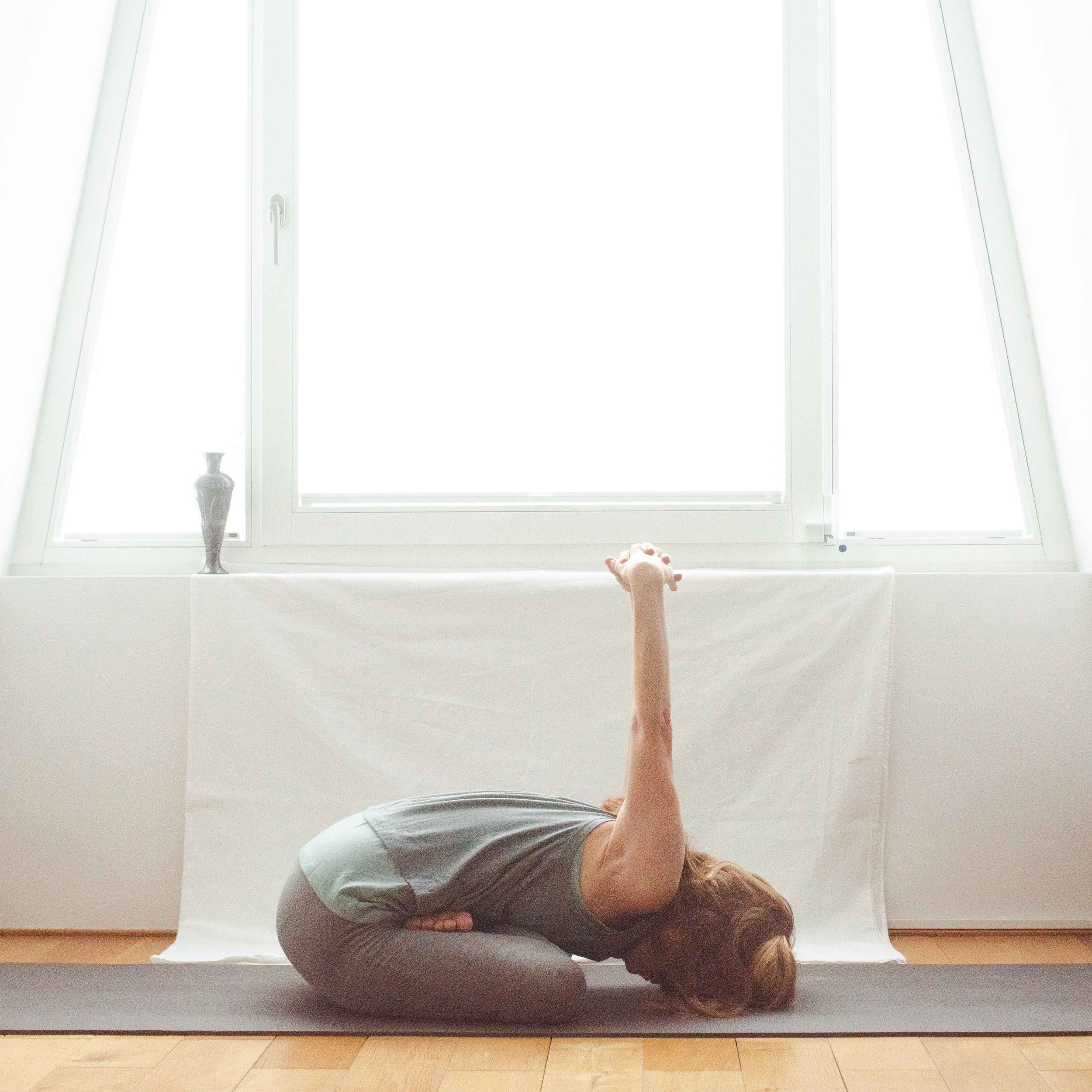
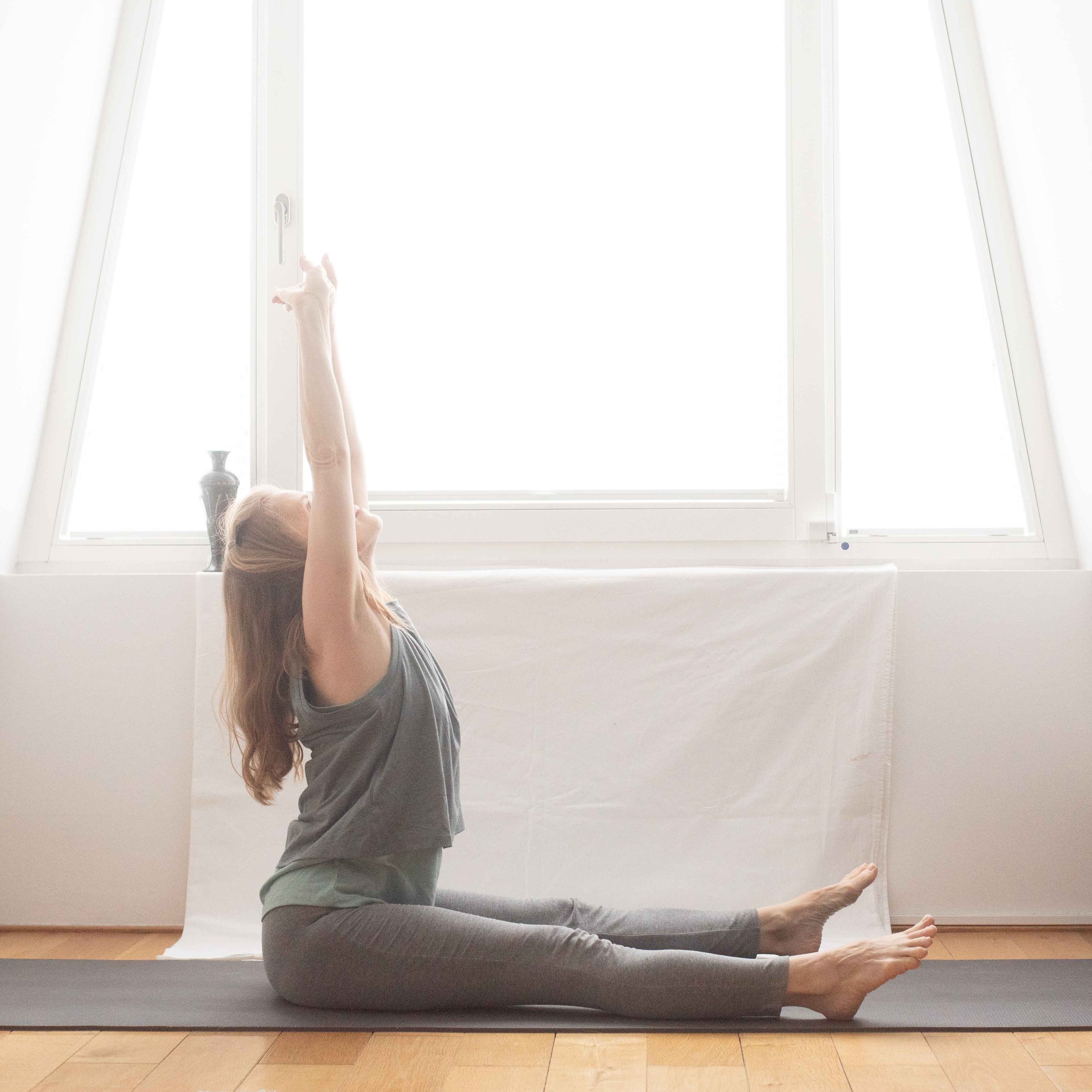
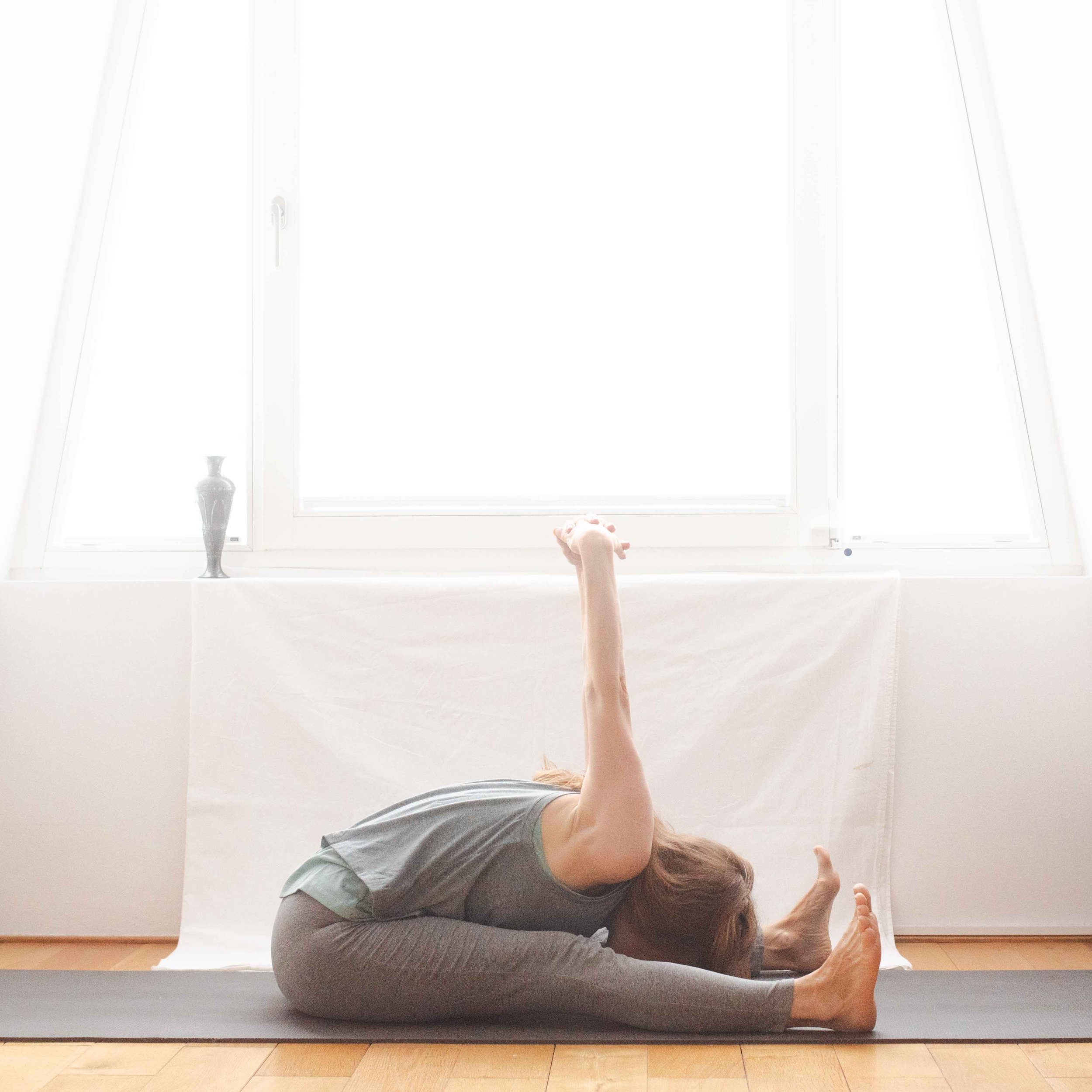
Urdhva dhanurasana

Urdhva dhanurasana July 2023
The next focus is on backbends. Again. I was already closer to my goal of getting out of the bridge and into a standing position. It has moved into the distance again. So the focus until the end of October is the backbends. That's a little more than three months. Something can already move within three months.
I have many ideas how to improve the position urdhva dhanurasana. There are so many exercises that it's hard to choose. You can't do everything.
My rules when I want to improve a position are:
1. repeat the position up to three times.
2. hold the pose for at least 2 minutes.
3. analyze where the strength can be improved, where the flexibility can be improved and if the technique is good.
4. find effective exercises that lead to the position.
How you get into a position often determines how deep you can go into the position.
The picture tells me that I can work on my hip extension, but also upper body flexibility and shoulders.
I'm looking forward to the next three months.
Summary splits
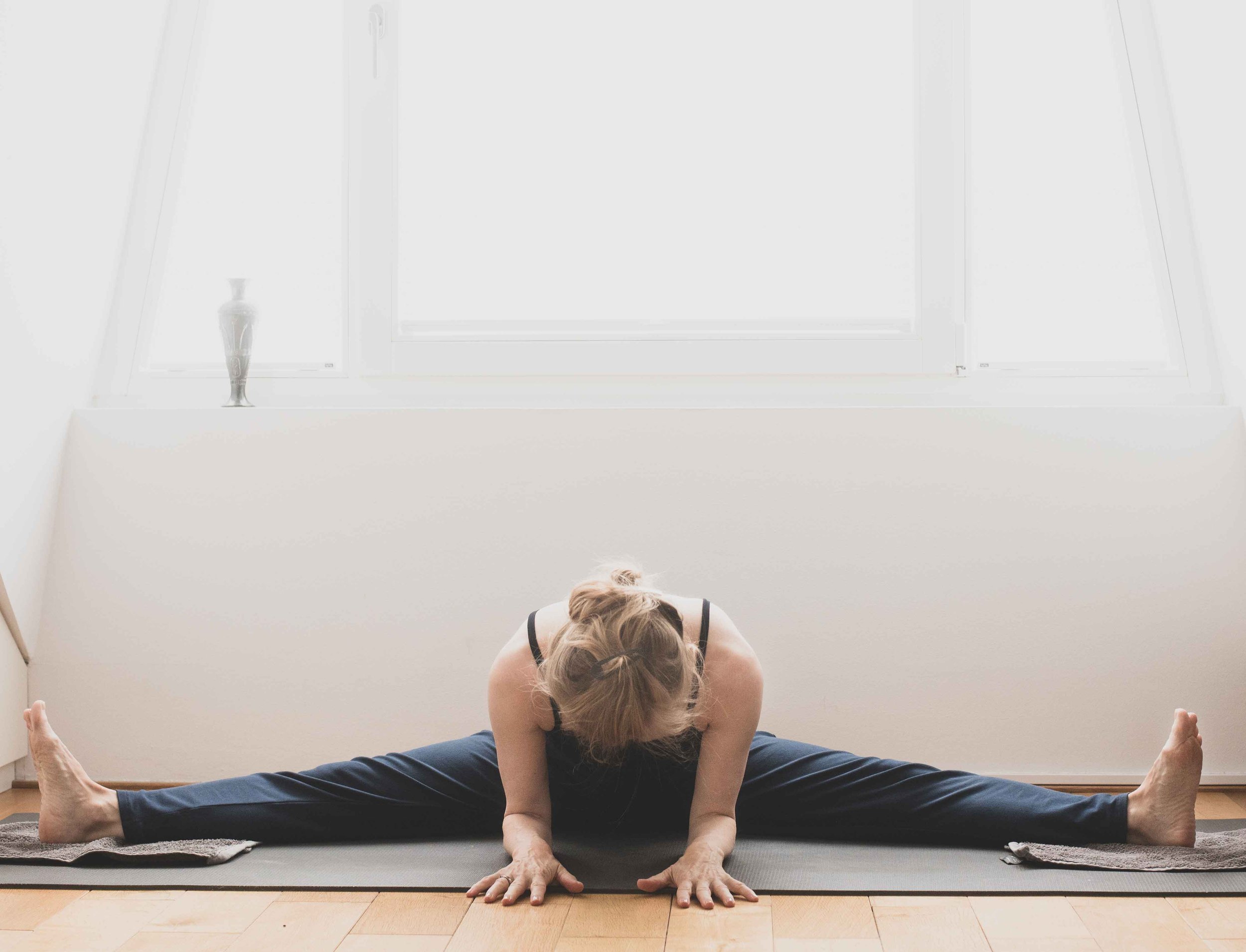
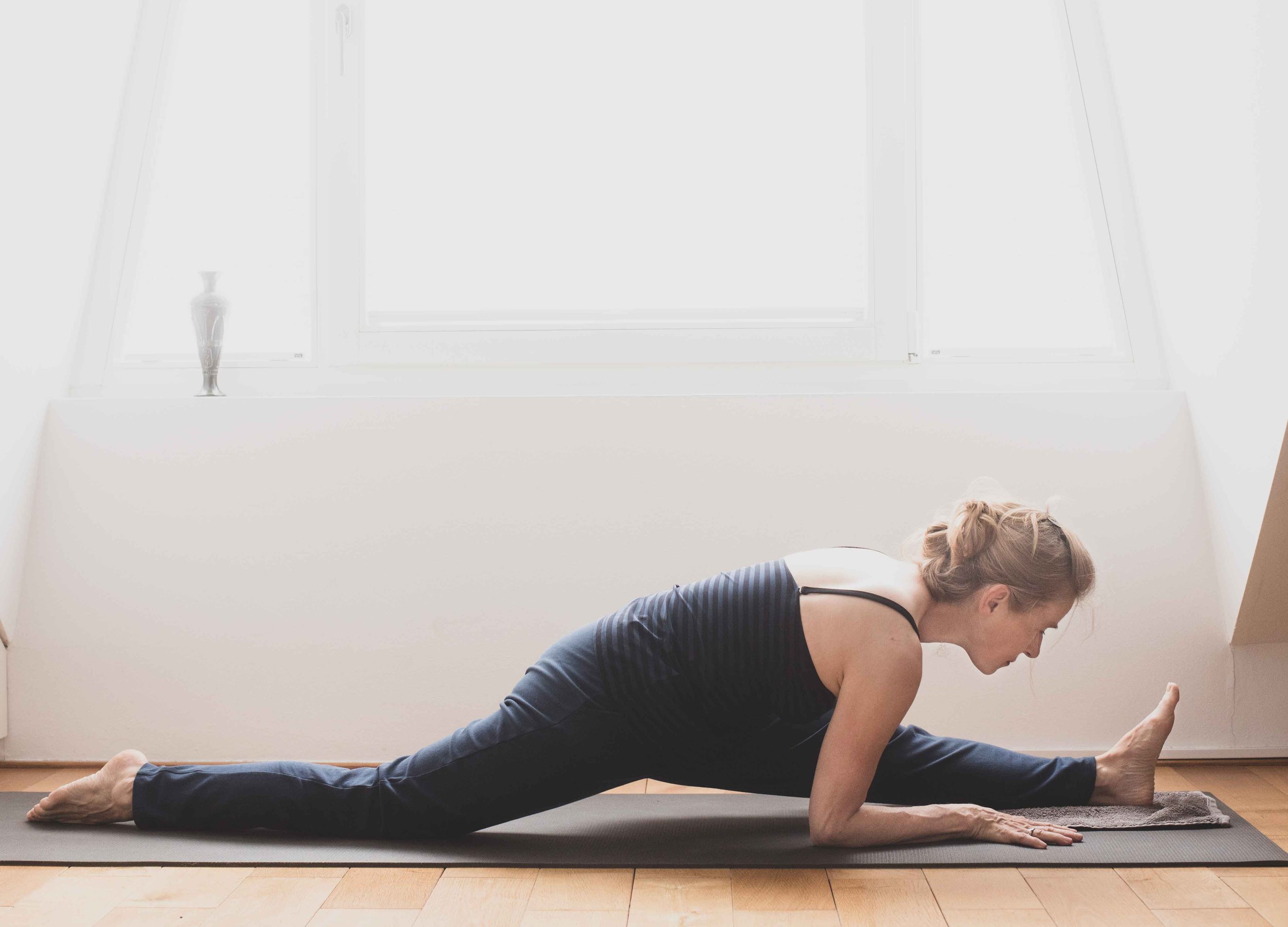
For over 12 weeks I focused on learning the splits, both forward and to the side. I have gotten much better during these months. My understanding of the positions has increased. The splits are far from mastered. The process and the insights are just as important as executing a perfect position.
My insights:
1. when you practice the opportunity is there to get better. However, this does not necessarily have to happen. One can practice ineffectively or injure oneself, then the opposite of progress happens. But the opportunity is there.
2. if one does not practice, however, then one does not keep the level that one has already reached, but one becomes worse.
3. practicing is important, but understanding the positions is also important.
3.1 In hanumanasana (forward split) the hamstrings are stretched, but also the front hip muscles. You can stretch these in isolation. When performing the pose, it is important to keep in mind that the hips should remain parallel.
3.2 The most important insight in Samakonasana is that one must make a hollow back. The skeleton does not allow the legs to extend to the side without being in a hollow back.
What is the next step?
I will continue to incorporate exercises on splits into my practice. However, it will no longer be the absolute focus. The next focus will be backbends. At the end of the year I will take pictures of the splits to see how far I have come. Both positions are feasible.
Two events have slowed down my progress:
- First, I have been traveling. Then it is always difficult to practice. It is certainly possible to practice while traveling. Eliminating these interruptions would be a huge step forward.
- Unfortunately, I have also injured myself. I go to strength training regularly. There I also practice the adductors. The machine stretches the legs out to the side. With the force of the adductors, you have to squeeze the machine parts together. I had the parts swinging too far outward to have an intense stretch as well. This was probably too intense. Unfortunately, you always notice only the day after whether you have exceeded the limits too far. It will always be the case that you hurt yourself sometimes. It is a fine line between a healthy overstepping of the boundaries and being too far gone.
Hanumanasana and Samakonasana are possible I'll keep at it.
Splits - anatomy of the hips
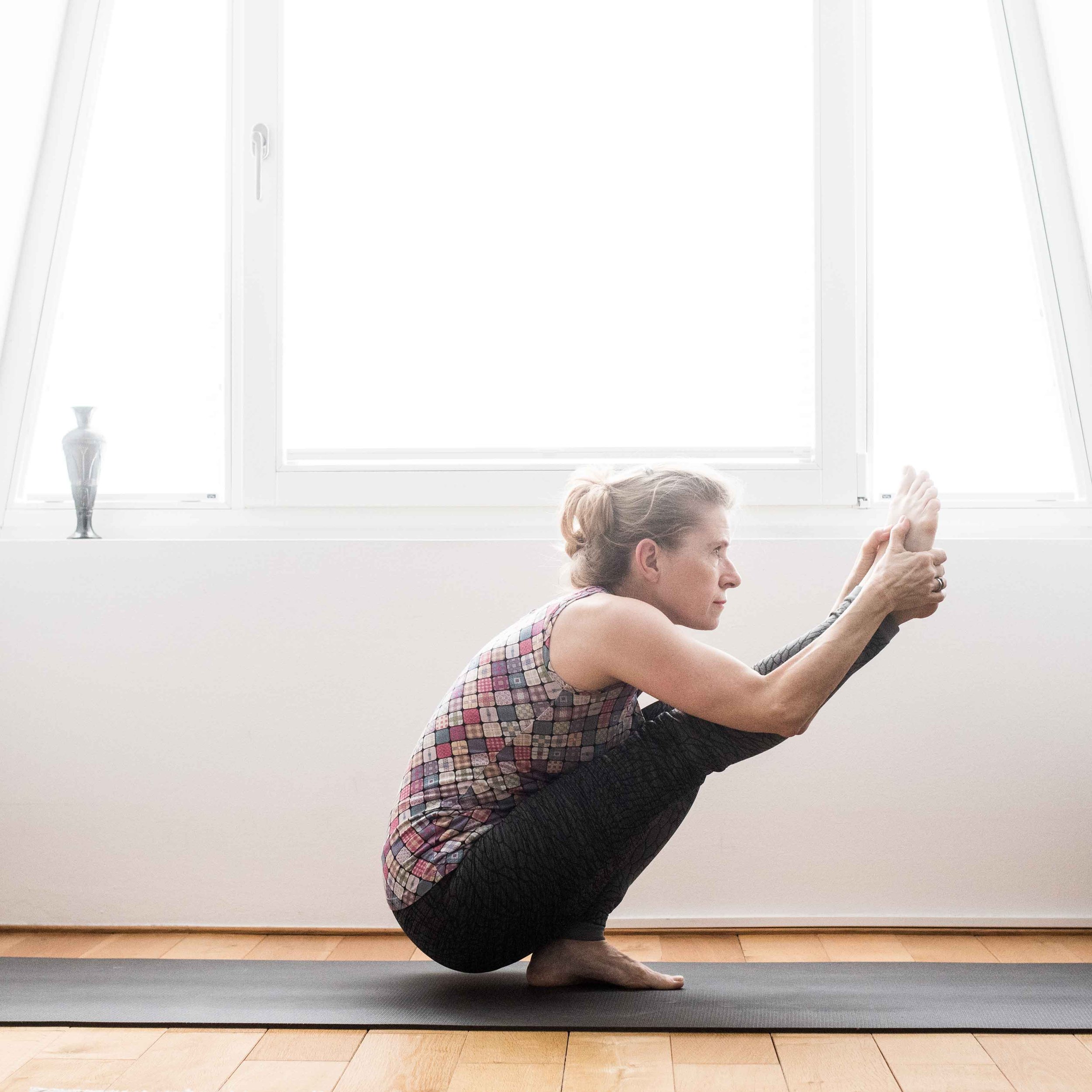
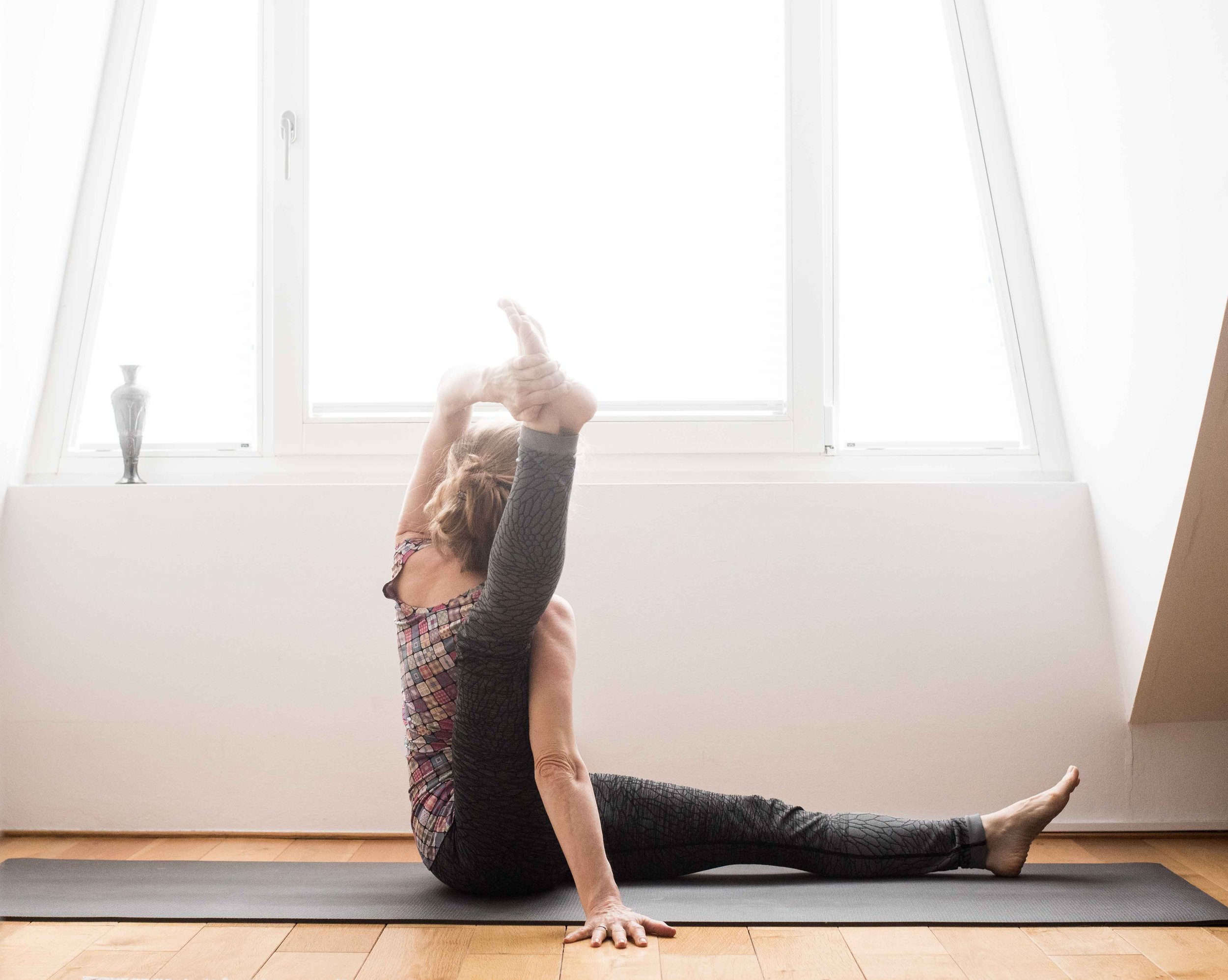
The hips are a ball and socket joint. The human body has two ball joints. The second ball joint is the shoulders.
All other joints are constructed differently, even those that allow great mobility, such as the ankle or wrist.
When we practice the splits, we practice on the mobility of the hips. From the anatomy, a lot is possible. Most have a lot of potential to increase their mobility. Only, who uses their potential to the full?
The opposite is the case. Most people sit most of the time. Over time, standing becomes a problem. Older people often walk bent forward because they can no longer properly extend the hip flexor. This often results in back problems as well.
The great strength of our body is adaptability. If people do not move, then they become weaker, mobility decreases. The reverse is also true, however, that man can become more mobile and stronger if he exercises the body.
Let's work on what is possible. Our anatomy allows the split forward and to the side.
In addition to the hips, the back leg muscles are also stretched.
The S-curve of the spine is emphasized.
The first step to being able to perform an asana is understanding that it is possible. Knowing that the hip is a ball and socket joint is an important realization for this.
However, it is also important to know that the legs can only be extended far out to the side when the back is hollowed. Samakoanasana is easier to perform when the legs rotate externally.
It's not just looking and following along. Even that is difficult. But one only perceives the external form. The inner work does not remain visible. In the splits, the legs pull toward the center of the body rather than outward. The execution of the asanas becomes easier when we understand them. What is the anatomy? Which muscles should be contracted? In which direction does the energy go. How do you get into an asana and how do you leave it?
Any 'knowledge' should be taken with a grain of salt. It is always only the current state of knowledge we are talking about.
To the pictures:
Any pose that, stretches the hamstrings and expands the mobility of the hips, also helps to learn the splits.
Side split exercise
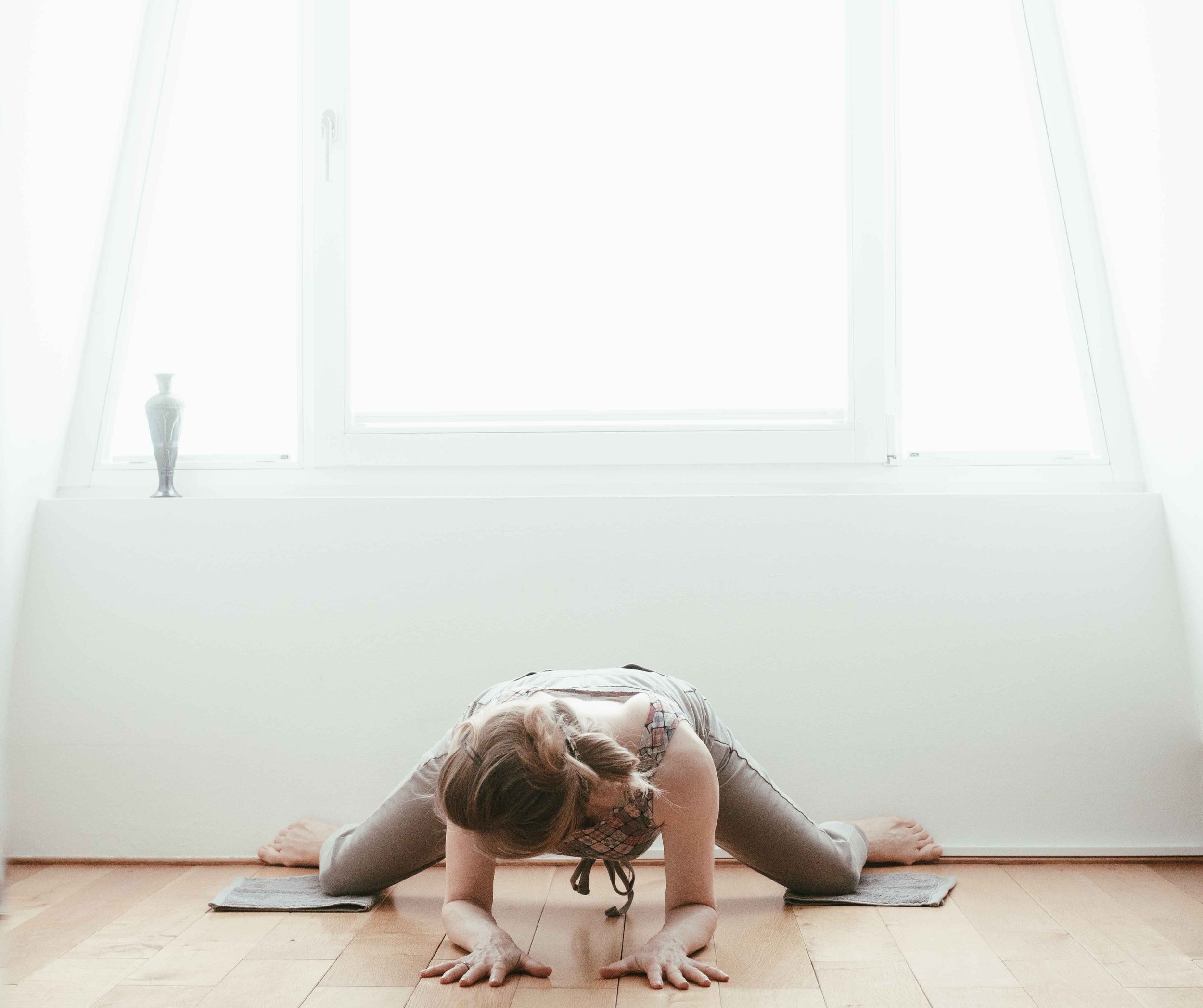
Side split exercise, May 2023
The exercise in the picture is a little easier than the splits with legs outstretched. I usually practice the position without pressing the feet against the wall. But this variation gives more stability. It's also easier to get deeper into the position because you can move your feet to the side against the wall. The knees can then follow. That is as far as the body will allow.
The legs press down or to the center of the body. The muscle that is tensed is called the adductor. This is probably not used very often by most people. Now I train this muscle additionally in a strength studio. There are machines that train exactly this adductor.
As a supplement to yoga, I signed up at a body building studio. You can attend classes there, do cardio training, but also do strength exercises on machines. At my age (over 60), strength deteriorates very quickly. Yoga alone is not enough to stay strong.
More strength helps me with almost all yoga postures.
That yoga is enough to stay fit is an illusion. The cardiovascular system is not trained. Yoga does make you stronger. Many postures become easier if you do additional strength training.
Happy weekend.
Samakonasana - foot position
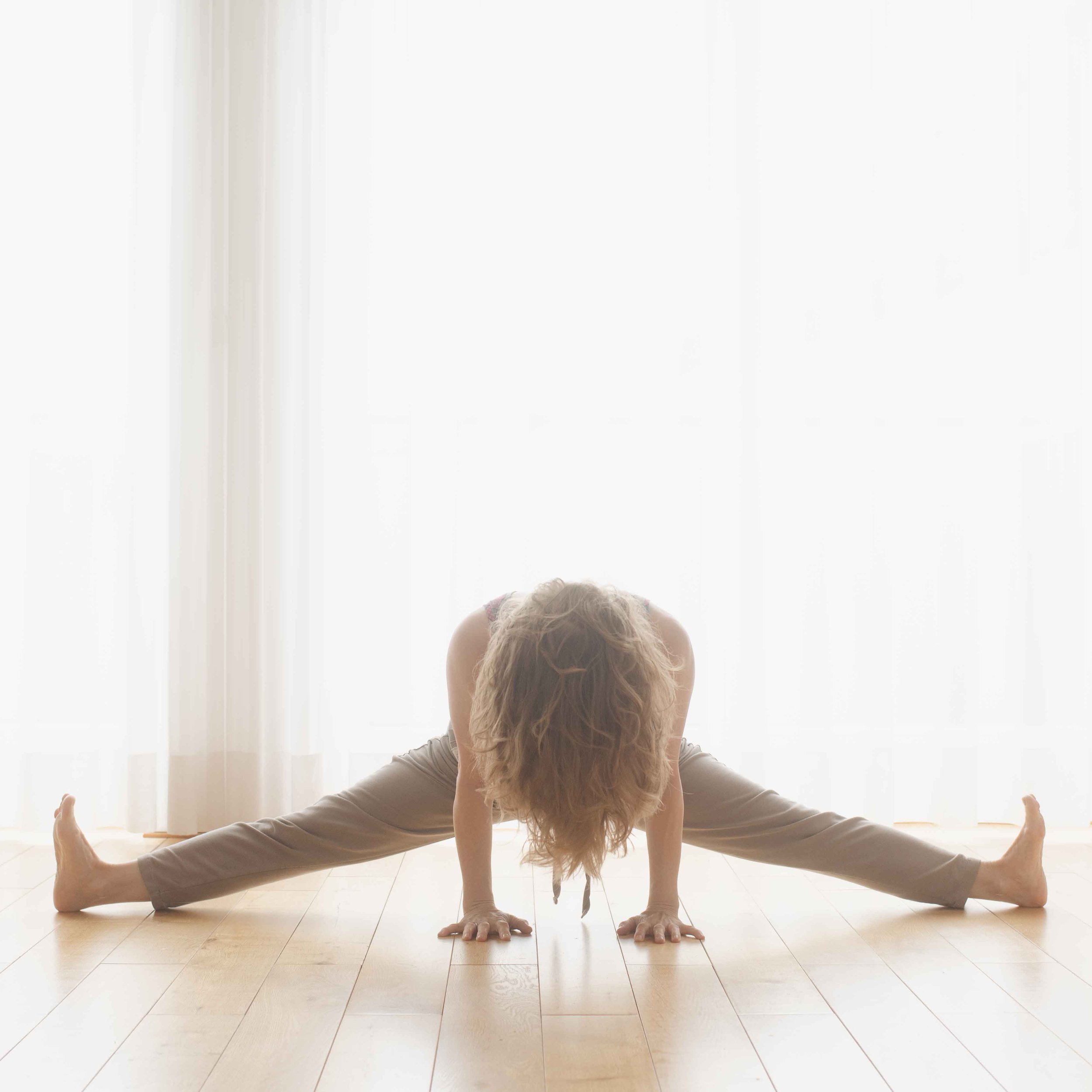
Samakonasana, April 2023
The soles of the feet can remain on the floor when you slide your feet to the side. But there is also the possibility to turn the legs and slide further to the side with the verse. Oddly enough, I got a little deeper into the position with the verses on the floor. However, it is easier to lose control of the movement.
Getting out of the stance is just as difficult as getting into it. Strong adductors allow the legs to move back toward the center of the body.
Another option is to let yourself fall backwards. This is only recommended if you are already relatively deep in the position.
It is important to hold the position, tense muscles, slide deeper into the position. The body quickly learns to perform the movements. It becomes easier with each time.
I will focus on the splits for four more weeks.

1. Ashtanga Yoga Series and the splits
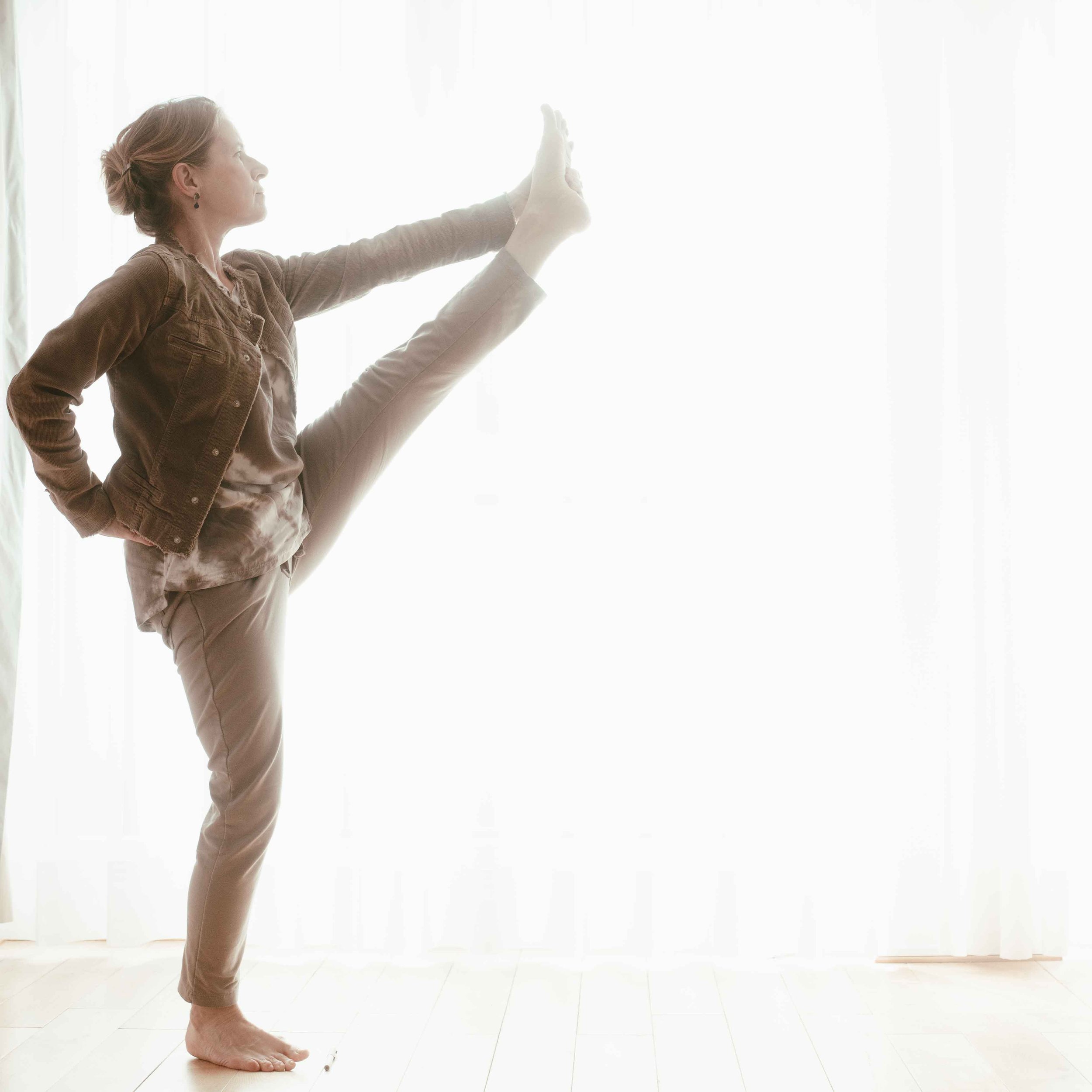


In Ashtanga Yoga, the splits are already introduced in the standing postures. Utthita hasta padangusthasana and utthita parsvasahita are standing splits. Since all standing postures are also balance exercises, it doesn't exactly get easier. Over the years I have gotten better and better at balancing and staying long and steady in the postures. I haven't noticed a big change in flexibility. Since my sacroiliac joint injury, I no longer bend forward toward my leg.
I usually practice the splits (hanumanasana and sanakonasana) before these postures. Through the sun salutations, the body is already warmed up. First asanas are also practiced. Since the posture comes at the beginning of the series, the mind is still fresh. This allows for intensive practice. I don't think much of practicing the difficult postures at the end of a session. You are already exhausted by then. This makes injuries more likely.
Since I have been practicing the splits, both positions have improved.

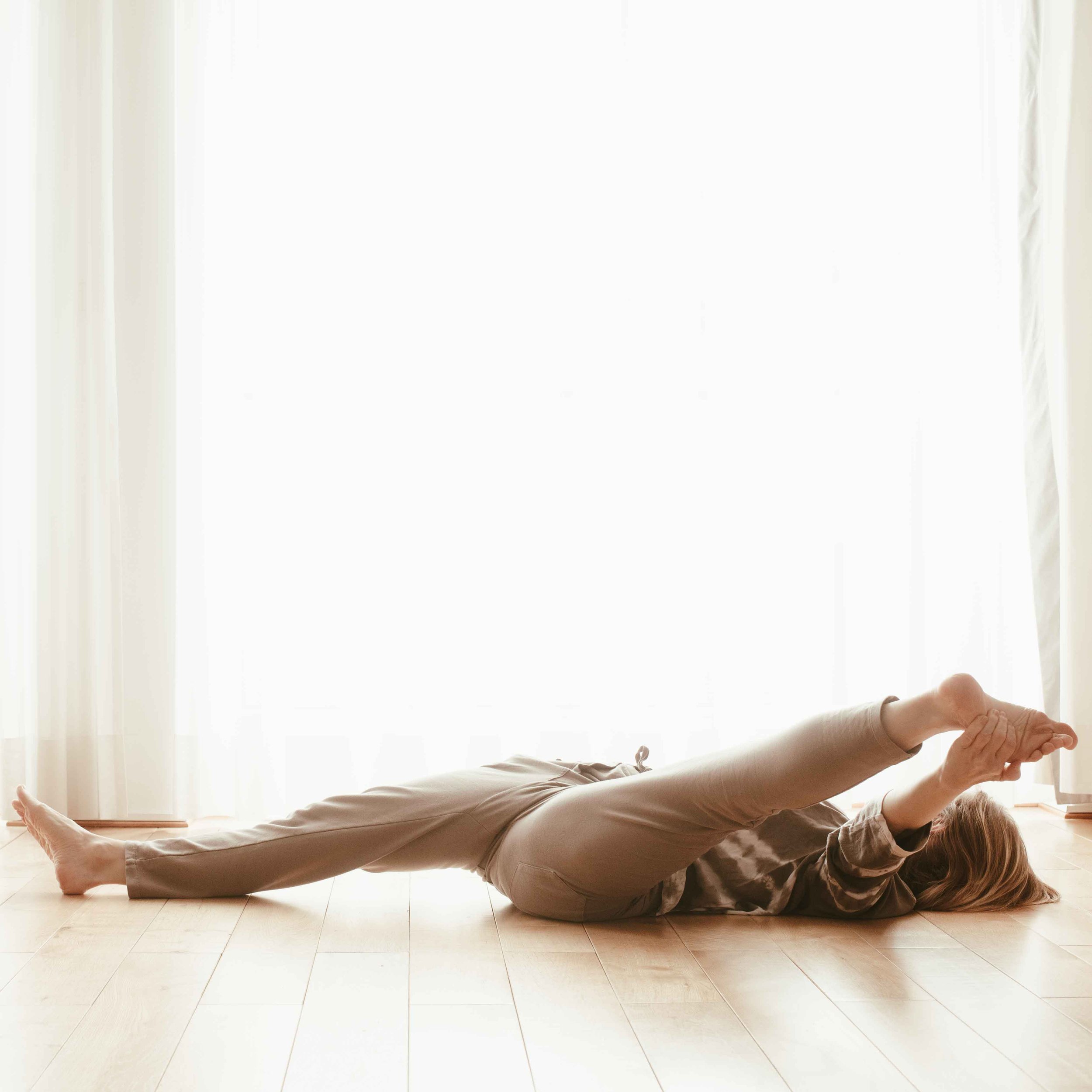
The same positions occur again almost at the end of the middle part of the 1st series. Here the postures are called supta hasta padangusthasana and supta parsvasahita. Since one lies on one's back, all balance is eliminated. Using only the strength of the arms to push the leg toward the body or to the side to the floor allows only a gentle stretch. The progress is hardly perceptible. All my intensive splits exercises in which the weight of the body intensifies the stretch help to notice progress in the above positions. Without additional exercises not much happens.
For me, just supta hasta padangusthasana and supta parsvasahita are postures I use as a warm-up for my split exercises. They are the postures I practice when I have no energy to stretch more intensely.

Split exercise with a strap, April 2023
When you put a band around your foot and head, you feel how much more strength you have to intensify the stretch. You can press the foot of the leg lying on the floor against a wall to keep the leg stretched. There is a tendency for the knee to bend.
These positions of the first series made me work on the splits.
The splits will also appear in upcoming Ashtanga Yoga series. So it is a very good preparation for what is to come.
Everything that has to do with stretching takes time. Be patient with yourself.
Stretching technique - PNF

Exercise for side splits, April 2023
PNF is an effective method of stretching the muscles. PNF stands for proprioceptive neuromuscular facilitation. Written out, the words are hard to remember. I used this technique even before I knew the term.
Simply put, I tightened the muscles I wanted to stretch. With the muscles tensed, I stretched them. After a while, the body relaxed again on its own. The stretching is done.
Tightening the muscles is supposed to give the nervous system the all-clear. The message sent to the nervous system by tensing the muscles is: don't worry, there is no danger of overstretching the muscle. Since it's tense, it's shortened, and it's still a stretch before injury.
How exactly does PNF work:
1. stretch.
2. contract the muscles for up to 30 sec.
3. extend the stretch.
In various books I have found the recommendation to go deeper into a stretch when the muscles are relaxed.
My own practice is more like this:
I go slowly into a position. The position should still feel comfortable. I increase slowly. I tense the muscles and stay in the position for a while. With the muscles tense, I try to intensify the stretch. I go as far as I feel something. After a good while, when the body has calmed down and there is no more stretching pain, I relax the muscles. This usually happens automatically. Most of the time I also try to get further into a position with relaxed muscles. Then I tense my muscles again.....
I repeat this rhythm. Three repetitions are recommended. This is usually too little for me, because I increase slowly.
I hold the position with tensed muscles for a relatively long time.
I make sure that the breath is calm. A relaxed face also tells the nervous system that everything is OK.
The difference with what I have found in most books and my own practice is that I try to go deeper into a position with both relaxed muscles and tense muscles.
I intensify the stretching discomfort each time I go deeper into a position. You have to feel something if you want to push your limits. Going too far can bring an injury. The more you practice, the better you know your body and its limits. This helps to avoid injuries.
It may sound strange, but I find the stretching pain comfortable.
In the side split in the picture, I push the legs back with my hands. The wider the legs are open, the easier it is to put the belly on the floor. The energy goes to the center of the body. When the feet are stretched, it is easier to tense the muscles.
You have to experiment to find your own truth.
The position in the picture is very comfortable for me. This is how it should be.
Splits, splits, splits
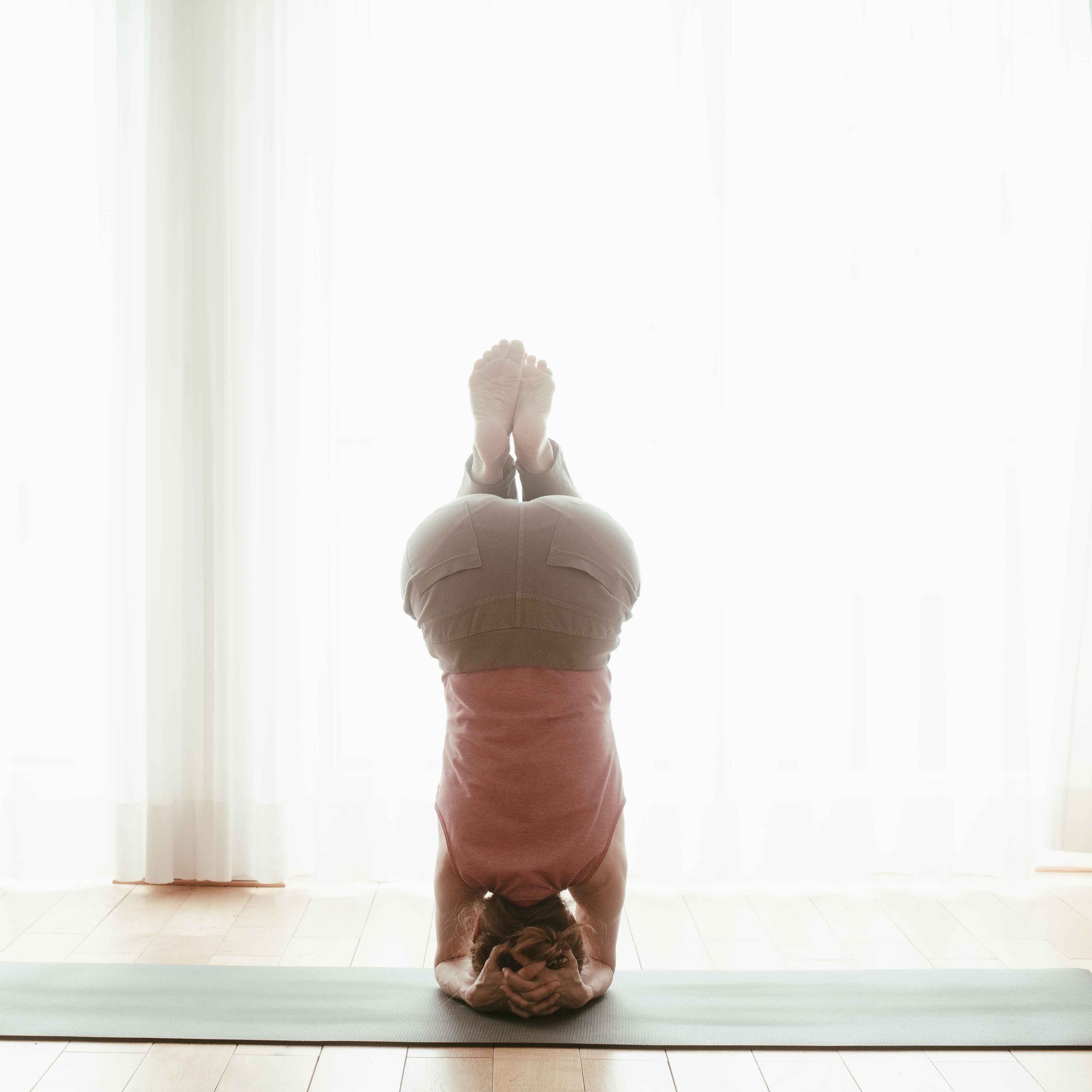
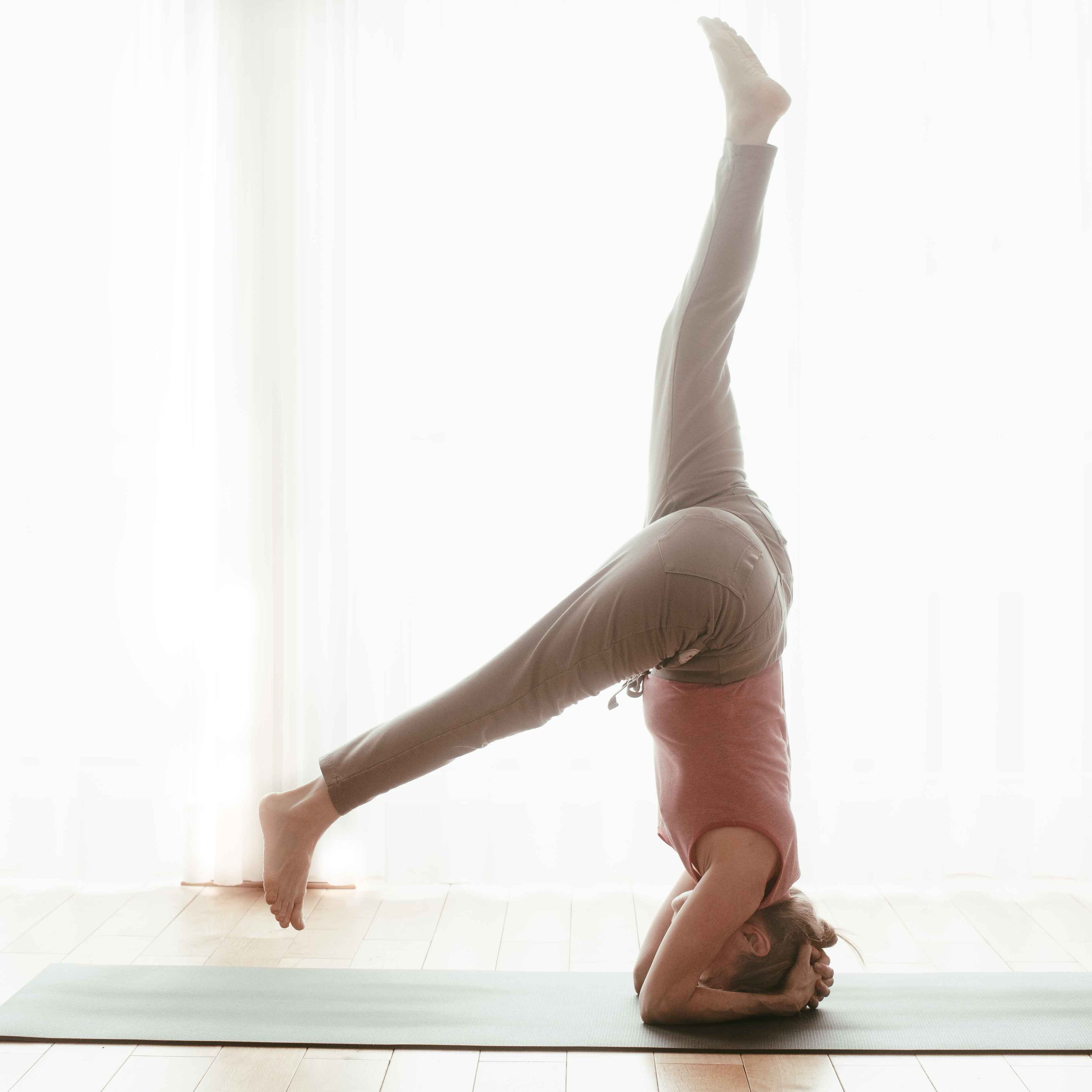
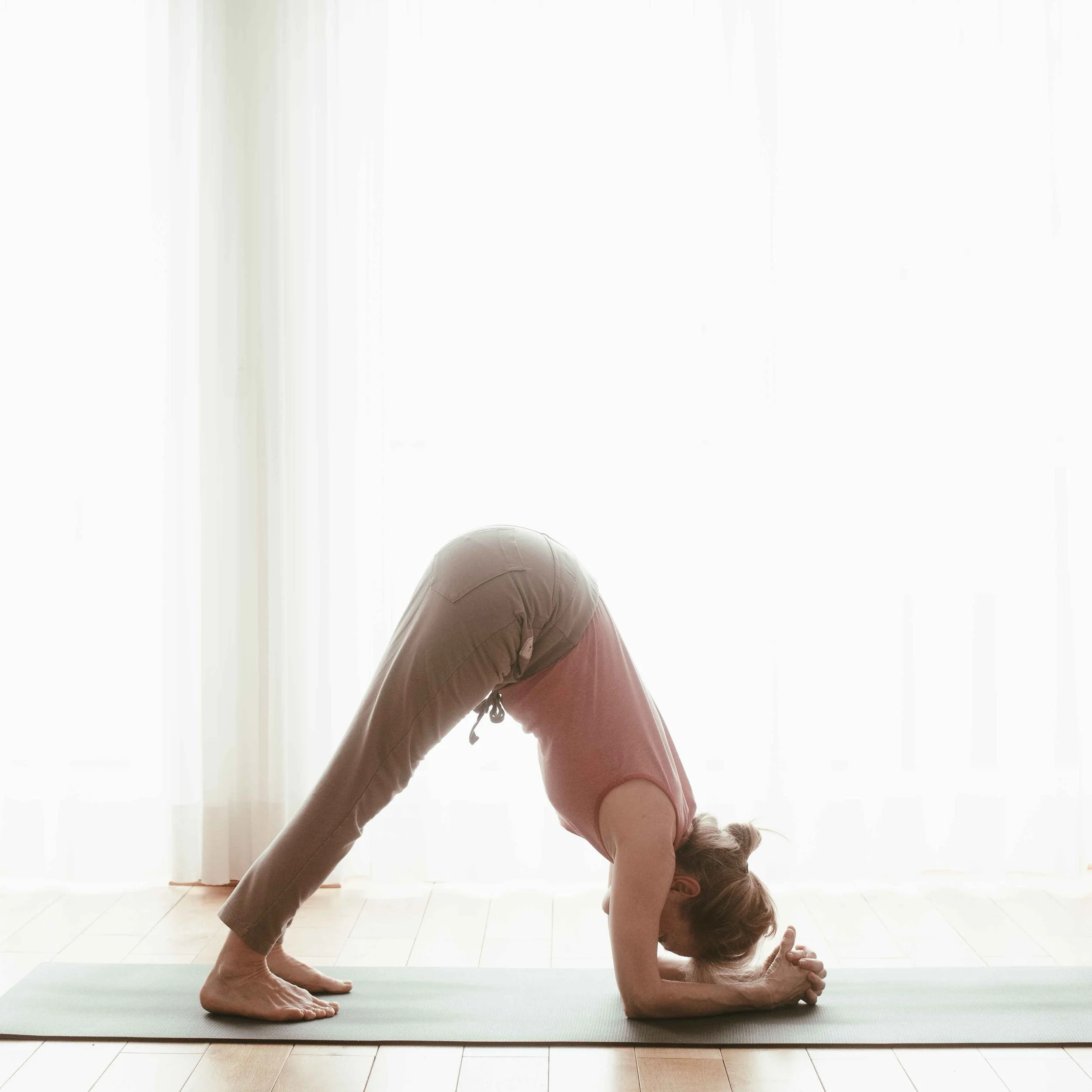
Practicing means an opportunity to improve the skills. You don't automatically get better by practicing. Doing the right thing is at least as important. Too much practice can lead to injury. Practicing intelligently is important.
Without practicing, the status quo will not be maintained. I'm not thinking of breaks that the body needs, but longer stops. The older you get, the more this applies. One week without strength training and I already notice that I have become weaker. One week without stretching and the body has quickly adapted to the 'new' lifestyle.
If you realize that interruptions mean a step backwards, it can motivate you to do something in any case. Little exercise is ten times better than zero days.
Until the end of May my focus is the splits (forward and sideways): hanumanasana and sanakonasana.
The exercises are already easier now. You don't always notice progress. All goals are intermediate. Once a goal is achieved, the next vision appears on the horizon.
At the end of May I will see how far I have come. If there is no progress at all, you are doing something wrong.
The splits are a basic position that can be practiced in combination with many positions. Above I am practicing the splits in the headstand. In the third picture I am stretching the hamstrings. It is a preliminary exercise of hanumanasana.
Continuing is the credo.
You never know everything.
Side splits - the wall gives resistance

Side split, sanakonasana, April 2023
Splits are part of my daily exercise and slowly I notice progress. The most important thing: the body no longer resists the stretch. It has become more comfortable to stretch. You always have to feel the stretch, otherwise nothing happens. You have to learn to decipher the language of the body. You have to distinguish between a welcome pain of stretching and a pain that leads to injury.
The most difficult moment is starting the exercise. Once I start practicing, everything is good and the 90 minutes fly by. Just roll out the mat and do the easiest forward bend you know, I tell myself. That helps to get started in the first place. The resistance to practice goes down. No sooner is the sun salutation practiced than the whim to test and push the limits kicks in. What is possible today, is then the question.
That I will practice 90 minutes today, I would not have thought. But just the same it came again.
Tomorrow is a day of rest.
Nobody exercises as much as amateur athletes, my physiotherapist once told me. But the breaks are part of learning. The body needs relaxation. The break gives rhythm to the practice. You practice six days a week, and on the seventh day you rest. You repeat this rhythm. Six days of practice in a row is doable, but to practice from now on forever without interruption until the end of your life is more than climbing the Himalayas.
In the picture I am practicing sanakonasana against the wall. The wall gives resistance and thus allows the legs to spread further. Also in this exercise I note that the hips are tilted forward and the back emphasizes the S-curve. The blogs help me with this. The muscles are 70% tense. The face is also relaxed, the breath is calm and regular.
Benefits of the splits

Dynamic and static side split, April 2023
A few years ago, I had several appointments with a physical therapist. In the waiting room, I met a middle-aged woman who looked pretty beat up. I asked her if I could ask her what was wrong. Most of the time we like to talk about what's on our minds. According to her, the woman was relatively athletic. She jogged a lot. At Christmas, she went grocery shopping. In the vegetable department there was a spring onion on the floor on which she slipped. Involuntarily, she went into a straddle. Her hip broke so badly that she was asked if she could be operated on in the university hospital in front of students. She agreed to it. But even after the operation she could walk only with pain. Now physiotherapy should help.
I thought to myself that this would not have happened to me.
Many runners (track and field athletes) or people who focus on strength training don't stretch enough.
Especially in accidents, a stretched body can prevent broken bones.
And what does B.K.S. Iyengar say? His book is still on my desk.
I quote from B.K.S. Iyengar's book 'Light on Yoga', page 218:
Effects (of sanakonasana, note from me):
In this pose the hip joints are worked and the legs learn to move freely in all directions. The spine is stretched. Any defect in the lower part of the spine is cured by this. Like hanumanasana, the pose invigorates the leg muscles and gives good form to the legs. It prevents hernias and takes away sciatic pain. It makes the blood pulsate in the pelvic area and in the sexual organs and keeps them healthy.
To the picture:
You can swing the leg up dynamically and then hold it. The dynamic part warms up the leg and the pelvic area. All dynamic exercises also give mental momentum and motivation.
How to get into samakonasana?

Samakonasana, April 2023
I consulted the master B.K.S. Iyengar. The bible 'Light on Yoga' is at hand. B.K.S. Iyengar writes on Sanakonasana:
Technique:
1. Stand in tadasana. Place the hands on the hips and extend the legs sideways as far as possible.
2. Place the palms on the floor and, with an exhalation, extend the legs further and further until you are sitting with both legs on the ground so that they form a straight line. The whole back of the legs, especially the knees, should be on the floor.
3. Place the palms of your hands in front of your chest and remain in this position for a few seconds.
4. Place the palms on the floor, raise the hips and bring the legs closer together until you are standing in Uttanasana again. Then stand in Tadasana and relax.
Source: Light on Yoga by B.K.S. Iyengar, page 218, translated by DeepL.
There are pictures for each posture. It is clear to see that B.K.S. Iyengar makes a hollow back before going deep into the posture.
With the hands on the floor, it is much easier to stretch the legs out to the side.
I usually use two towels under my feet to slide to the side more easily. The leg muscles are tense.
How you get into a position often makes all the difference.
With hands on the floor for support, it seems to me that there is much less chance of injury.
Still, there is work to be done. The floor still seems a long way off.